
Market Guide: Feature Reconciliation & UX Enhancement
Market Guide helps travelers explore Thai markets and discover local shops and street food more easily. The experience focuses on browsing markets and merchants, surfacing useful promotions, and enabling intuitive navigation within markets.
As the business expanded market coverage and partnerships, the product needed to scale without added complexity. This project became a turning point by introducing a consistent design thinking workflow and merging multiple apps into a single experience, requiring a complete rethink of the information architecture.
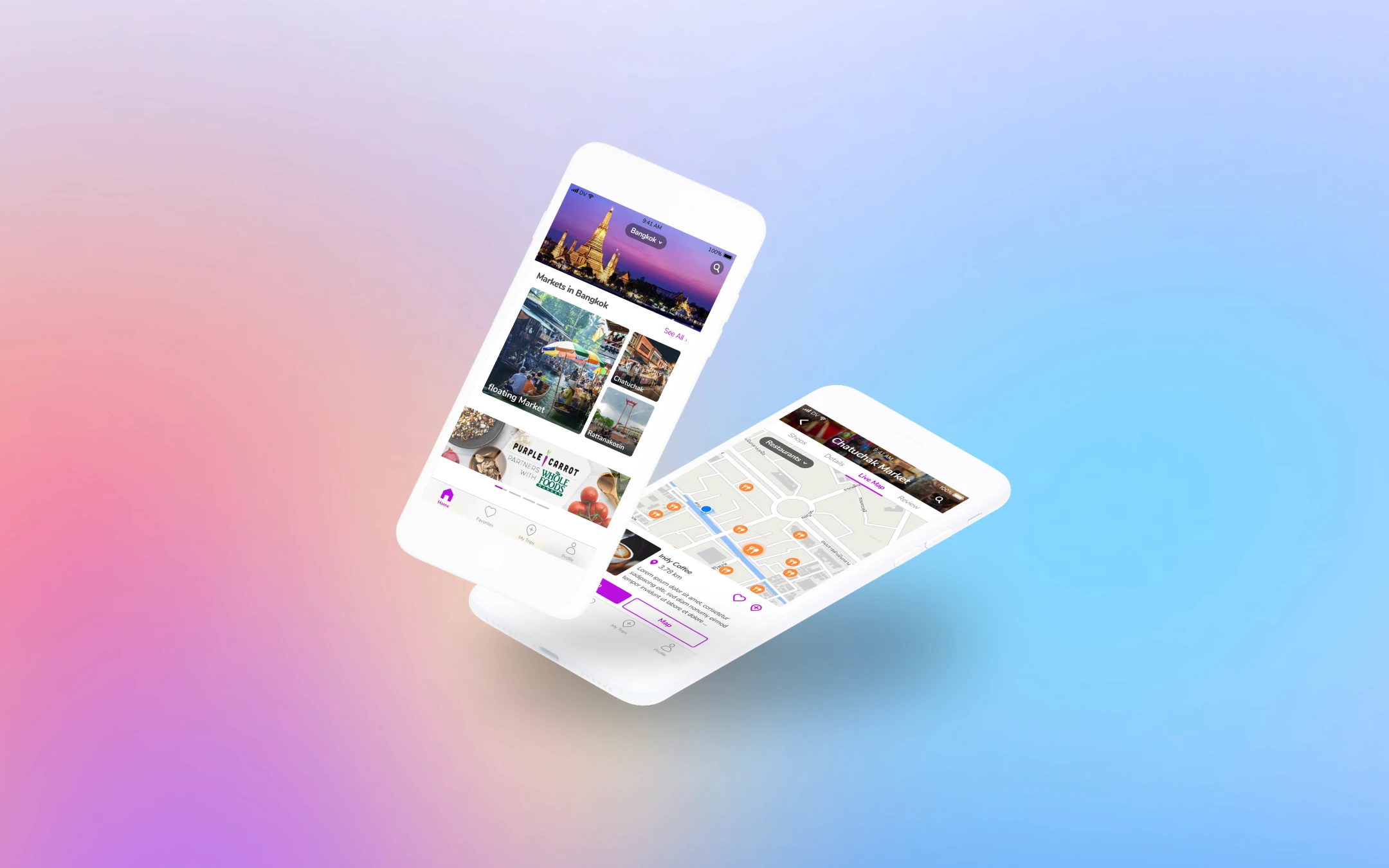
Market Guide Mobile App
A Marketplace Discovery Platform
Digital Ventures, SCB, Thailand
May - July 2018
End-to-end Product /
UX Designer
Challenge
Digital Ventures had three separate market guide apps, making it harder for users to explore multiple markets and difficult for the business to scale. We decided to merge them into a single Market Guide platform.
This exposed two challenges.
Organizational: The team jumped quickly into feature ideas like more categories, banners, and filters without aligning on user needs. Success metrics differed across teams, and decisions were mostly opinion-driven.
Product: Merging the apps increased content and complexity, requiring a rework of the information architecture. Feature prioritization stalled progress, so I proposed workshops to define user personas and guide decisions.
Results
Discoverability increased by 42%, showing that users could find relevant markets, merchants, and promotions more easily after the information architecture redesign, even as content scaled.
App maintenance time was reduced by 66%, as merging three apps into one eliminated duplicated design and development work and streamlined updates and new market launches.
Usage retention increased by 21%, indicating that the unified experience and clearer structure encouraged repeat use and delivered stronger long-term value for travelers.
↑ 42%
Increase in Discoverability
↓ 66%
Decrease in Maintenance Time
↑ 21%
Increase in Usage Retention
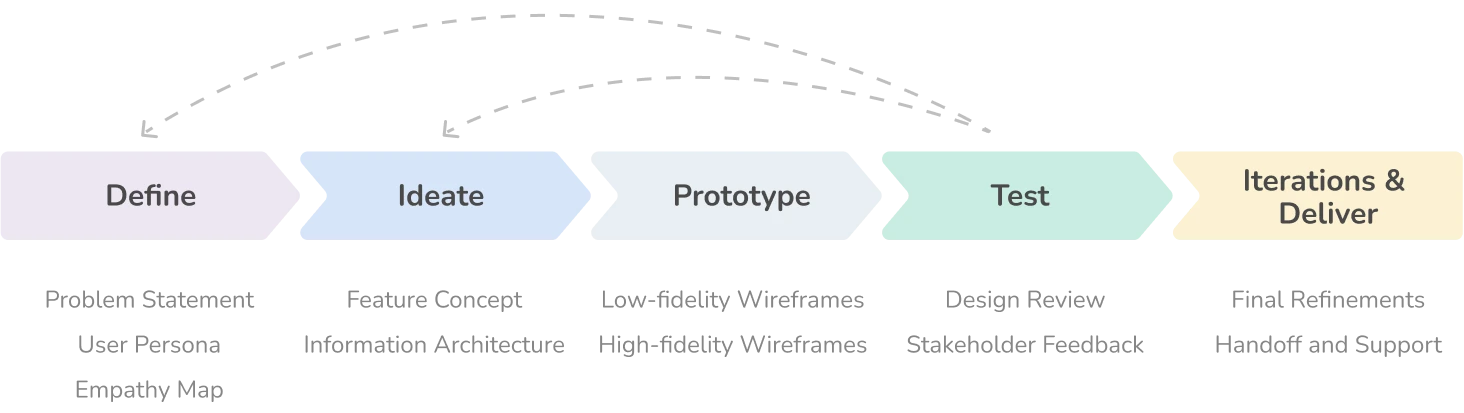
Process
Understand Users and Align on Outcomes
I led discovery workshops with stakeholders to align on user outcomes and business goals. We identified primary user groups including international travelers, market explorers, and local experience seekers.
We developed user personas and empathy maps to center discussions on real user needs rather than feature requests. This shifted the team from a feature-first mindset to user-outcome thinking.
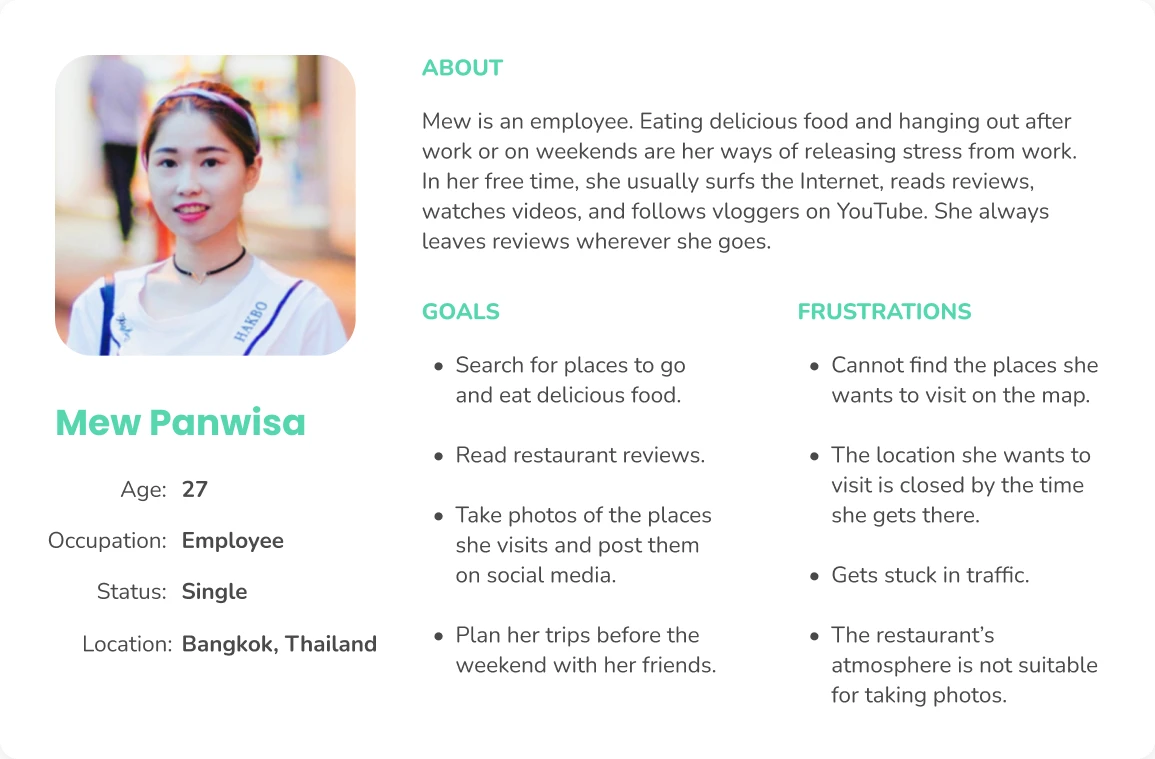
User Persona
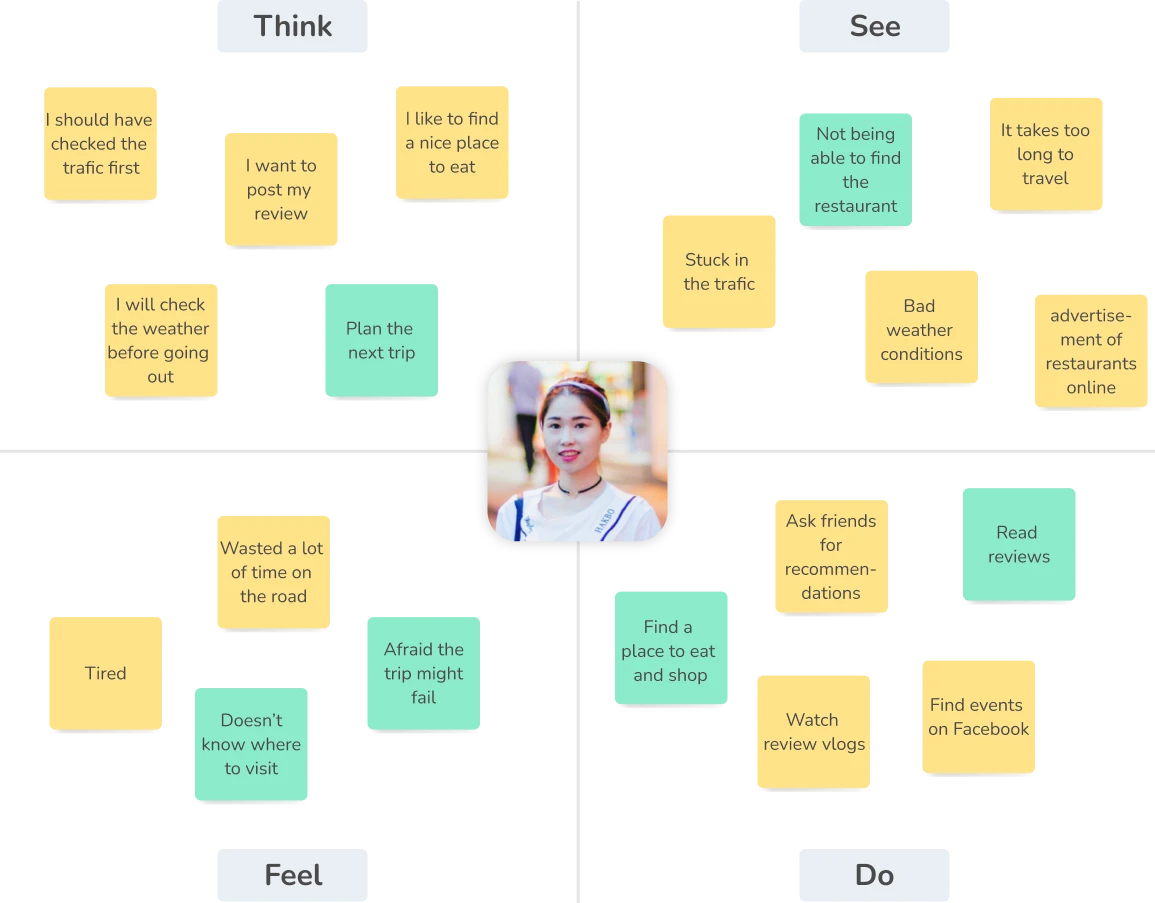
Empathy Map Scenario: On Sunday morning, I want to go shopping and grab something to eat in a local place.
Define Information Architecture
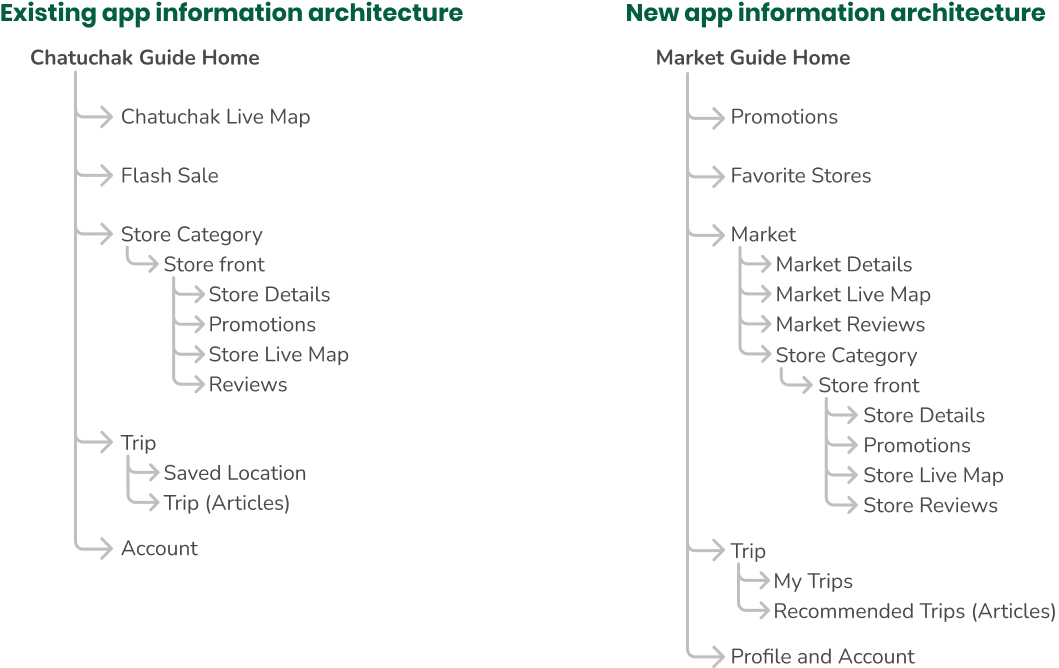
With personas and tasks defined, I mapped out the existing content and flows from all three apps. This work informed a new unified information architecture that simplified navigation while accommodating larger content volume.
Card sorting and tree testing helped validate the new structure before visual design began.
Iterative Design and Prototyping
I created low-fidelity wireframes to explore layout and navigation options. After feedback cycles with stakeholders, I translated these into high-fidelity prototypes and interactive flows. Usability testing validated clarity and ease of use before hand-off.
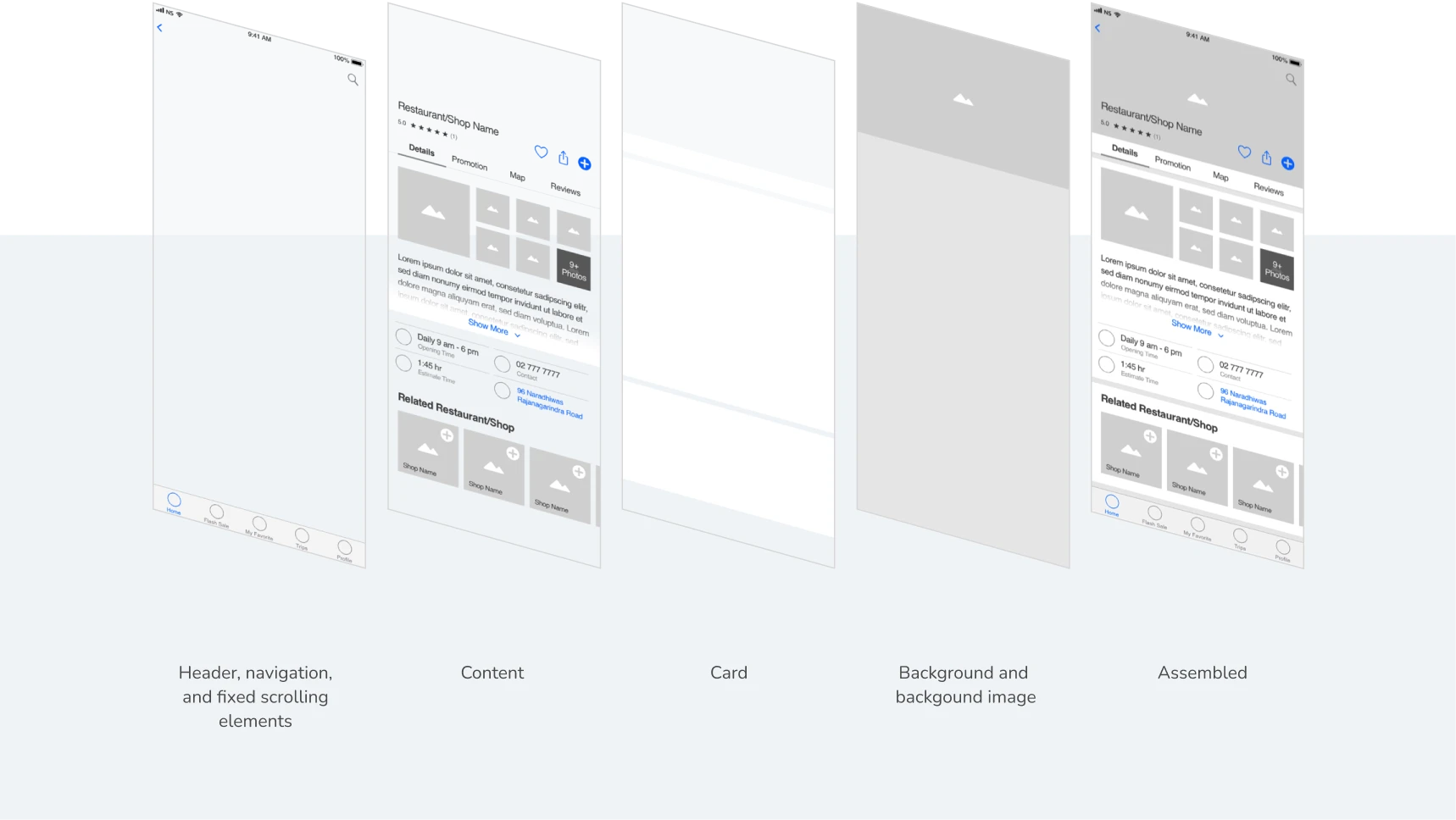
I created low-fidelity wireframes in Sketch, using card-based designs to make the content more digestible.
Final Solution
The unified Market Guide platform combined three fragmented apps into one cohesive experience with:
A simplified onboarding and market discovery path
Scalable navigation and search across all markets
Contextual promotions and featured merchants
Trip planning tools and route guidance
A design system that supported consistent UI patterns
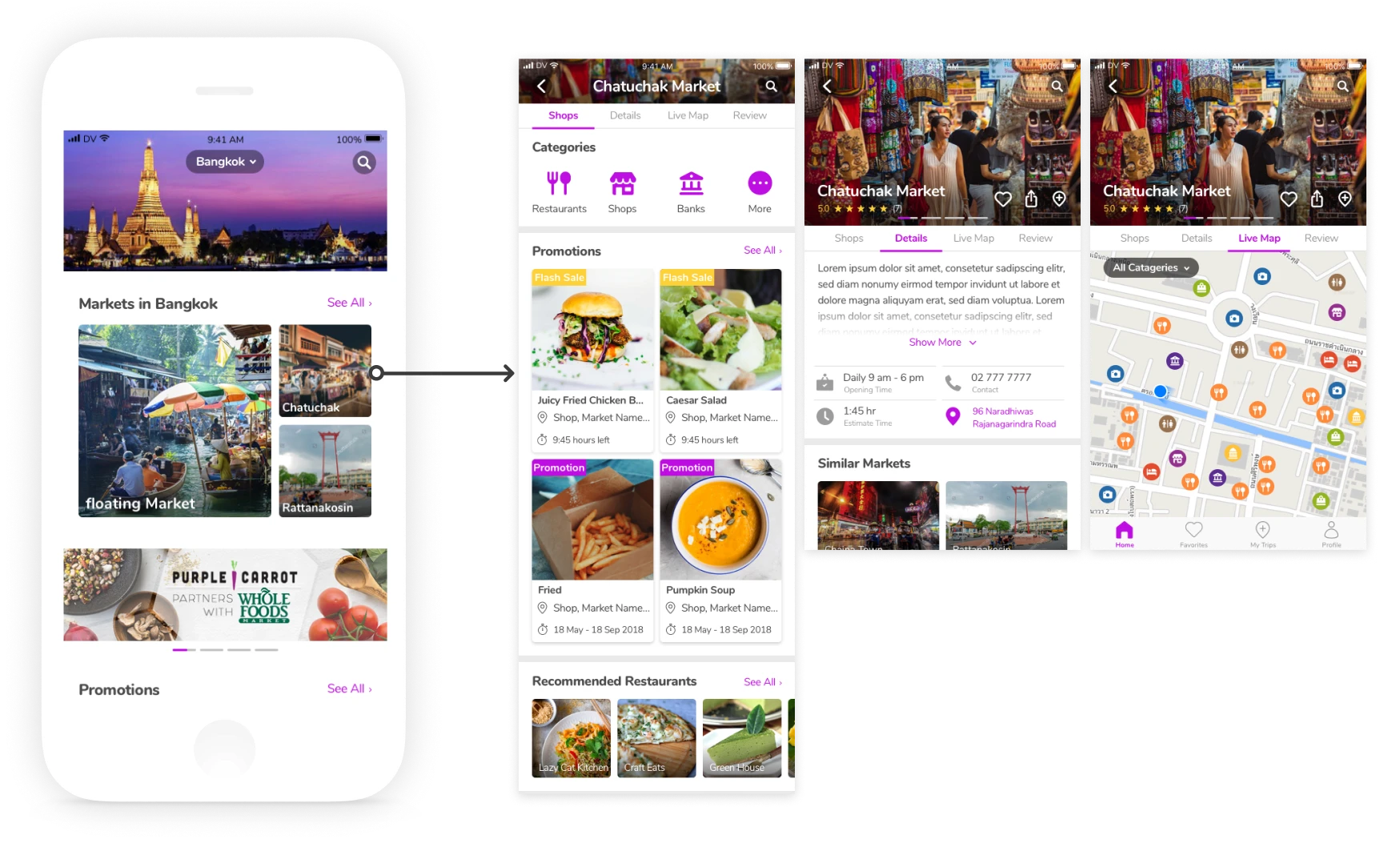
Discover Markets
Goal: Help travelers quickly explore markets across Thailand without switching between multiple apps.
Problem: Previously, each market existed in a separate app with its own navigation and structure. Users had to download different apps and relearn the interface each time they wanted to explore a new market, which created friction and limited discovery.
Design Decision:
Consolidated all markets into one home feed to remove app switching
Used clear visual hierarchy to surface market names, images, and key details
Kept navigation consistent across markets to support scale
Impact: This unified discovery flow contributed to a 42% increase in discoverability, validating that the new information architecture made it easier for users to find relevant markets as content expanded.
Filter Merchants
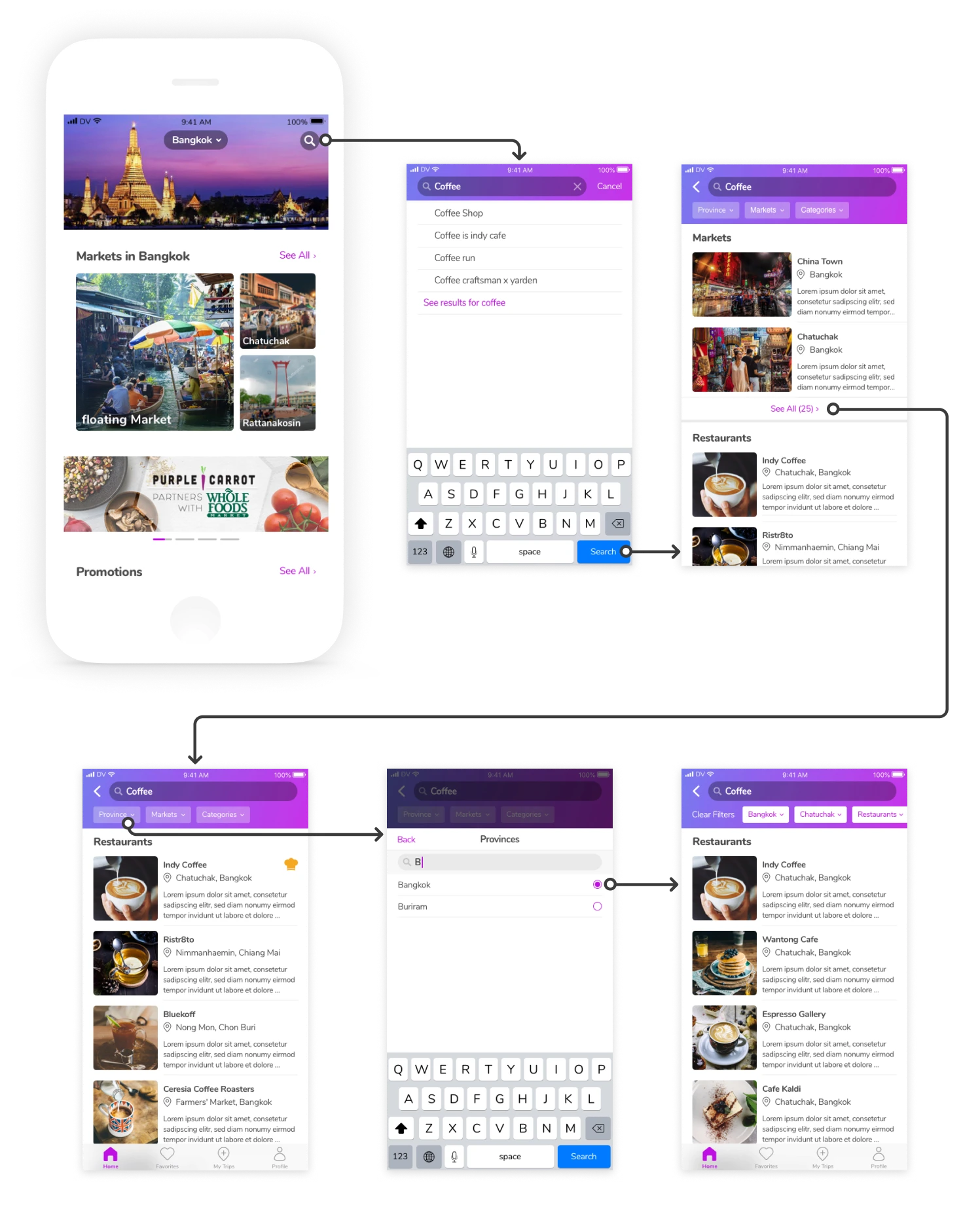
Goal: Help users quickly find relevant merchants within a market based on their interests, time, or needs.
Problem: As markets scaled, the number of merchants increased significantly. Without effective filtering, users had to scroll through long lists, making it harder to locate specific shops or food vendors and increasing cognitive load during exploration.
Design Decision:
Prioritized the most commonly used filter categories to reduce complexity
Introduced lightweight filters to support fast scanning without overwhelming users
Used clear labels and familiar patterns to minimize learning effort
Ensured filters scaled consistently across different markets
Impact: By making it easier to find relevant merchants across many markets in one place, filtering supported a 21% increase in usage retention, showing that users were more likely to return to the app for repeated exploration.
What I Learned
Shifting mindsets matters: Aligning cross-functional teams around user outcomes rather than feature lists improves focus and efficiency.
Information architecture scales: Thoughtful IA is critical when consolidating multiple products to prevent cognitive overload.
Workshops drive alignment: Facilitating structured sessions created shared understanding and sped up decision-making.
If I had more time, I would complement analytics with deeper user research and benchmark satisfaction metrics to further refine prioritization.