
Honest Credit Card: Growth Enhancement Through Acquisition
Honest is a fintech offering simple, transparent credit cards for Indonesians. This is how we found and fixed the biggest leak in its onboarding funnel.
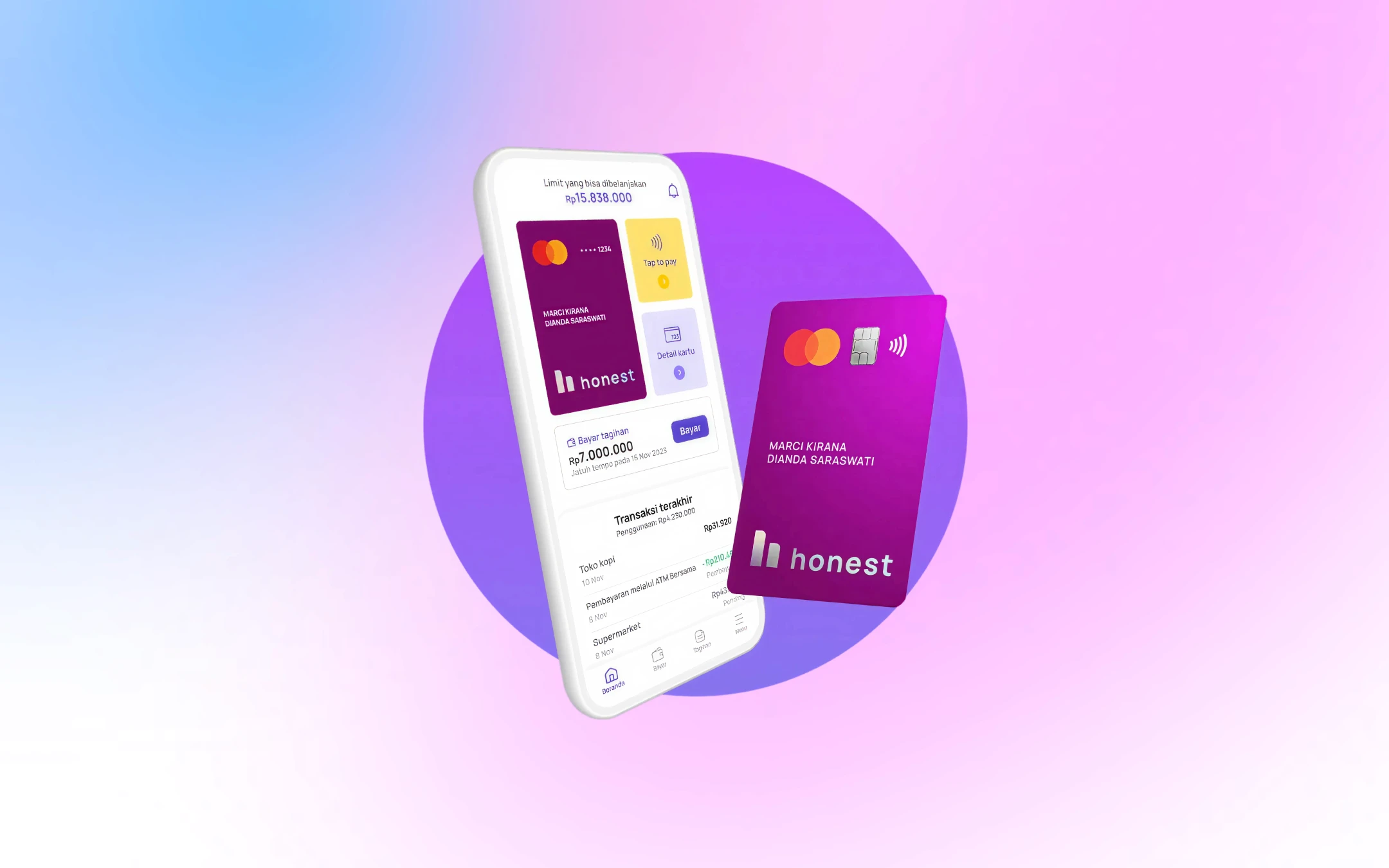
Credit card Mobile Application
Honest Technologies
Q3 2024 - Q2 2025
Growth Design Lead
Challenge
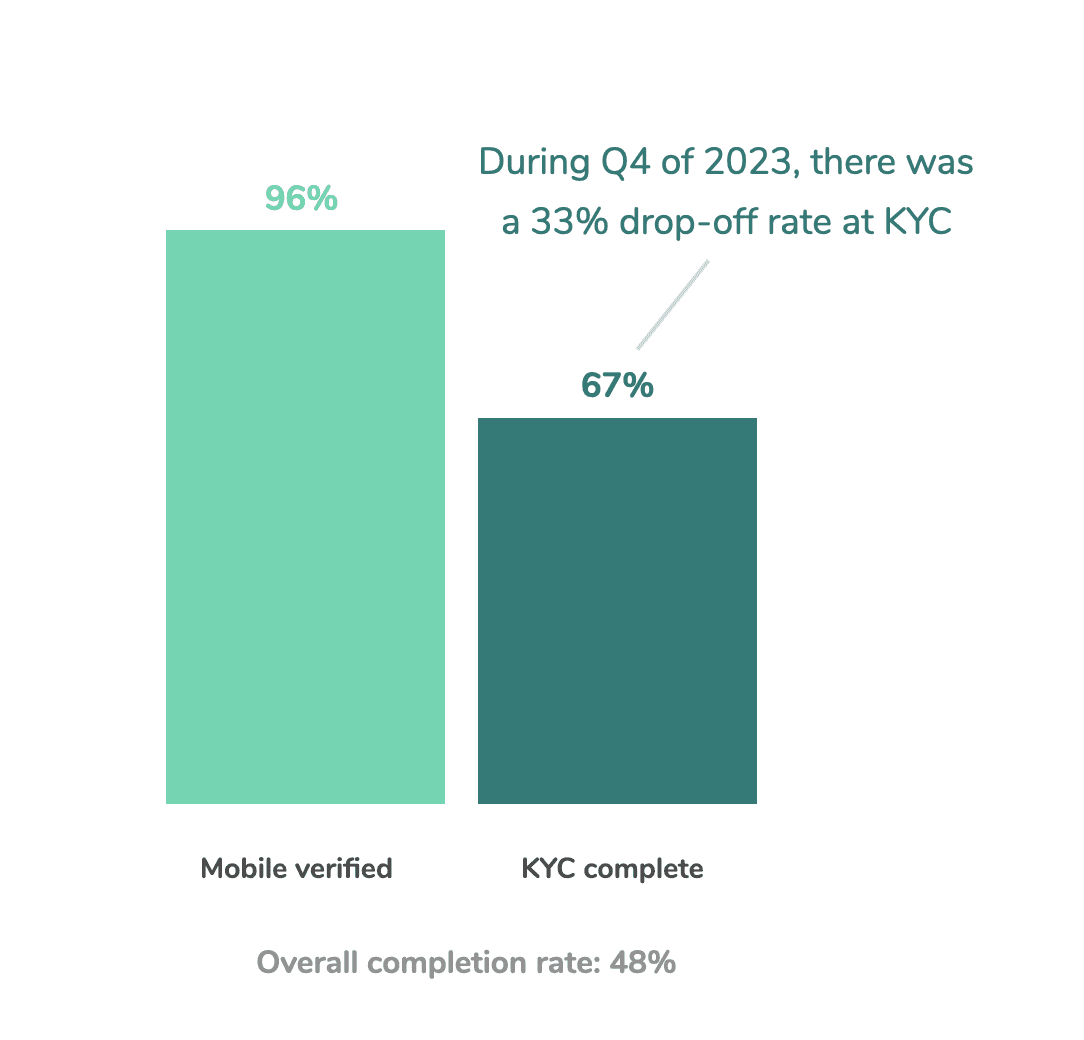
In Q4 2023, while most users progressed through mobile verification, we saw a sharp 33% drop at the KYC submission stage. This meant one in three potential customers left before verifying their identity, making it our most critical funnel issue to solve.
Regulation required applicants to scan their original KTP ID and pass a live face match so we couldn't remove those steps. We focused on what we could change: guidance, recovery from failed scans, and reminders to come back.
Results
We identified key friction points in the KYC journey and made changes across the user interface and backend process.
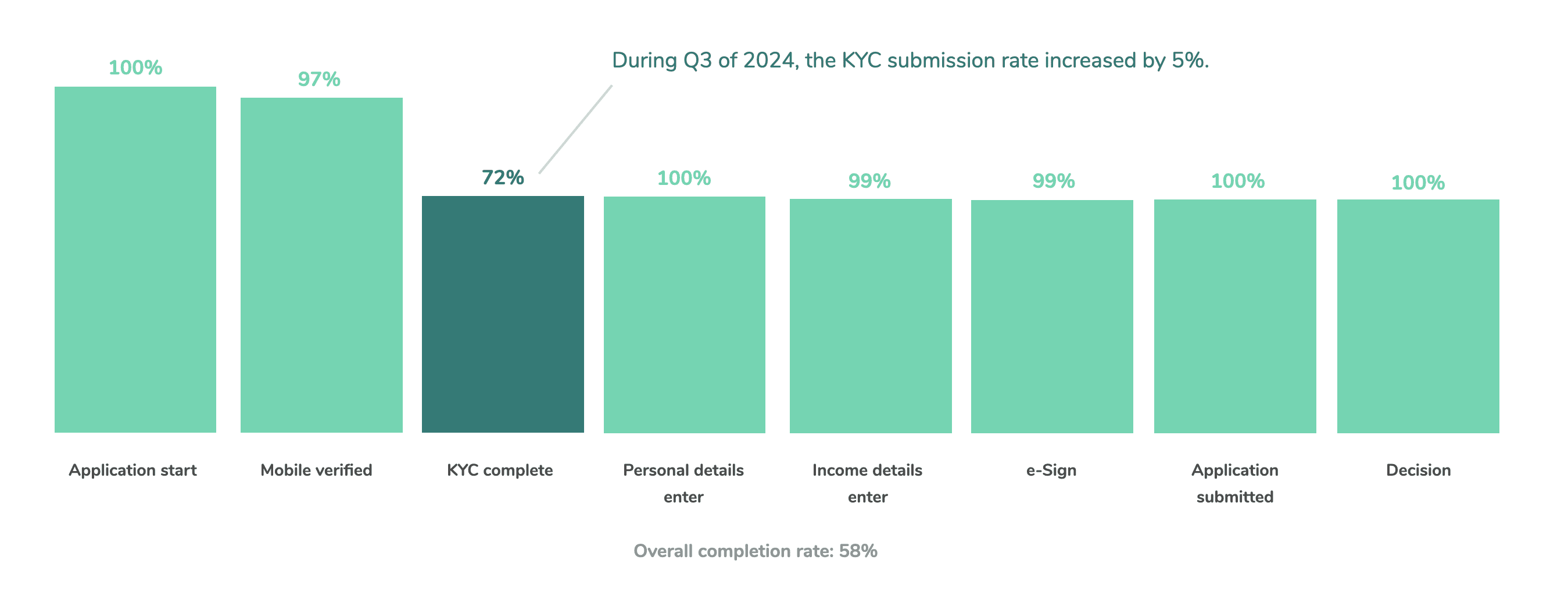
↑ 5%
KYC submissions (step 1 of 3)
↑ 10%
Completed applications. More people passing step 1 meant more finishing all 3 steps
↑ $2.5M
Estimated incremental lifetime revenue
The US$2.5M is the estimated lifetime value of the extra customers approved in Q3 2024, calculated with the data and product teams.
My role & leadership
Process
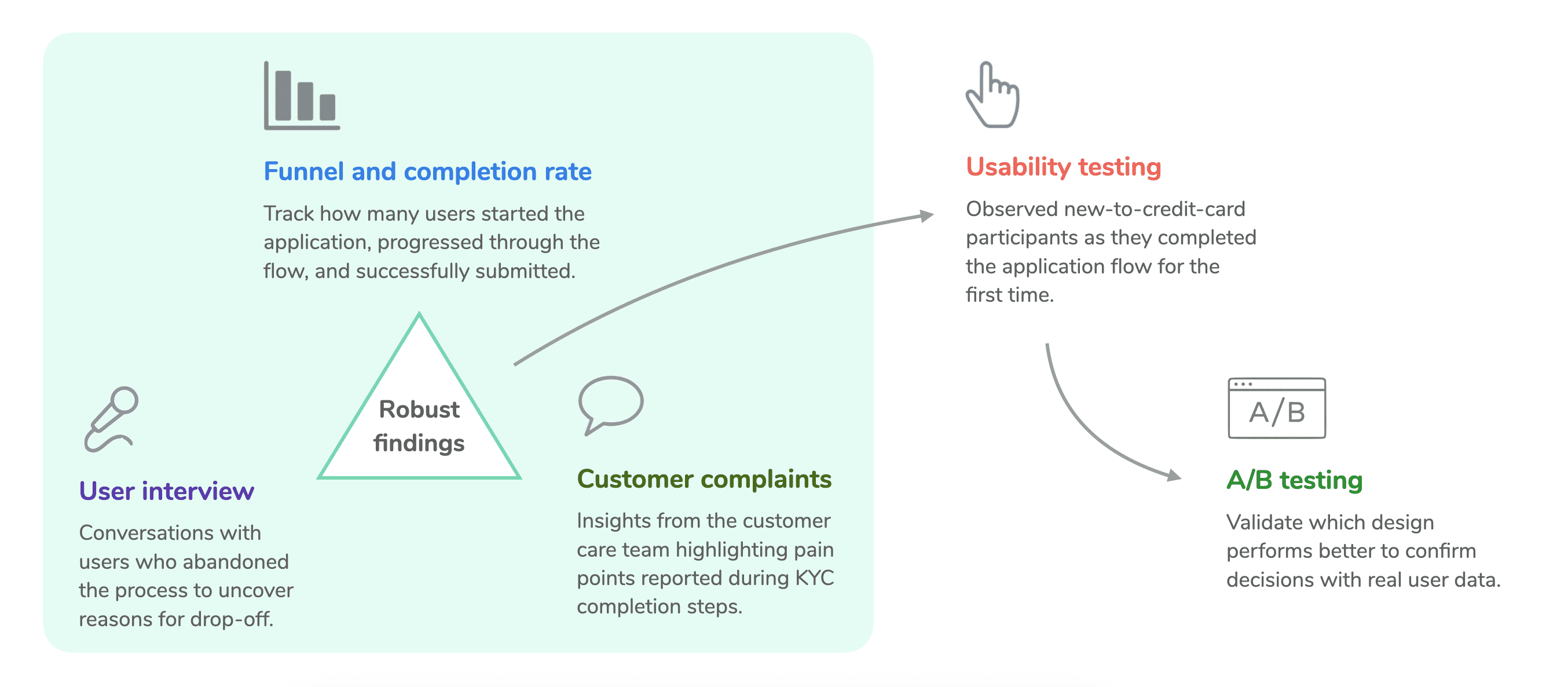
I combined four research methods to find why applicants dropped off.
Research & Analysis: We conducted user interviews, gathering feedback and complaints through the Customer Care team, and analyzed in-app analytics to understand the pain points and user needs. We also studied competitor apps and industry trends to gather insights
Wireframing & Prototyping: We redesigned the onboarding flow and built interactive prototype to test the design.
Usability Testing: We conducted usability tests with 7 participants to validate the design and identify areas for improvement. Based on the feedback, we made necessary adjustments to the design.
Conduct A/B testing: We iterate the designs after gathering feedback from the usability test and set up the A/B testing to validate new design proposal. We use the result to make the decision whether we release new design or not.
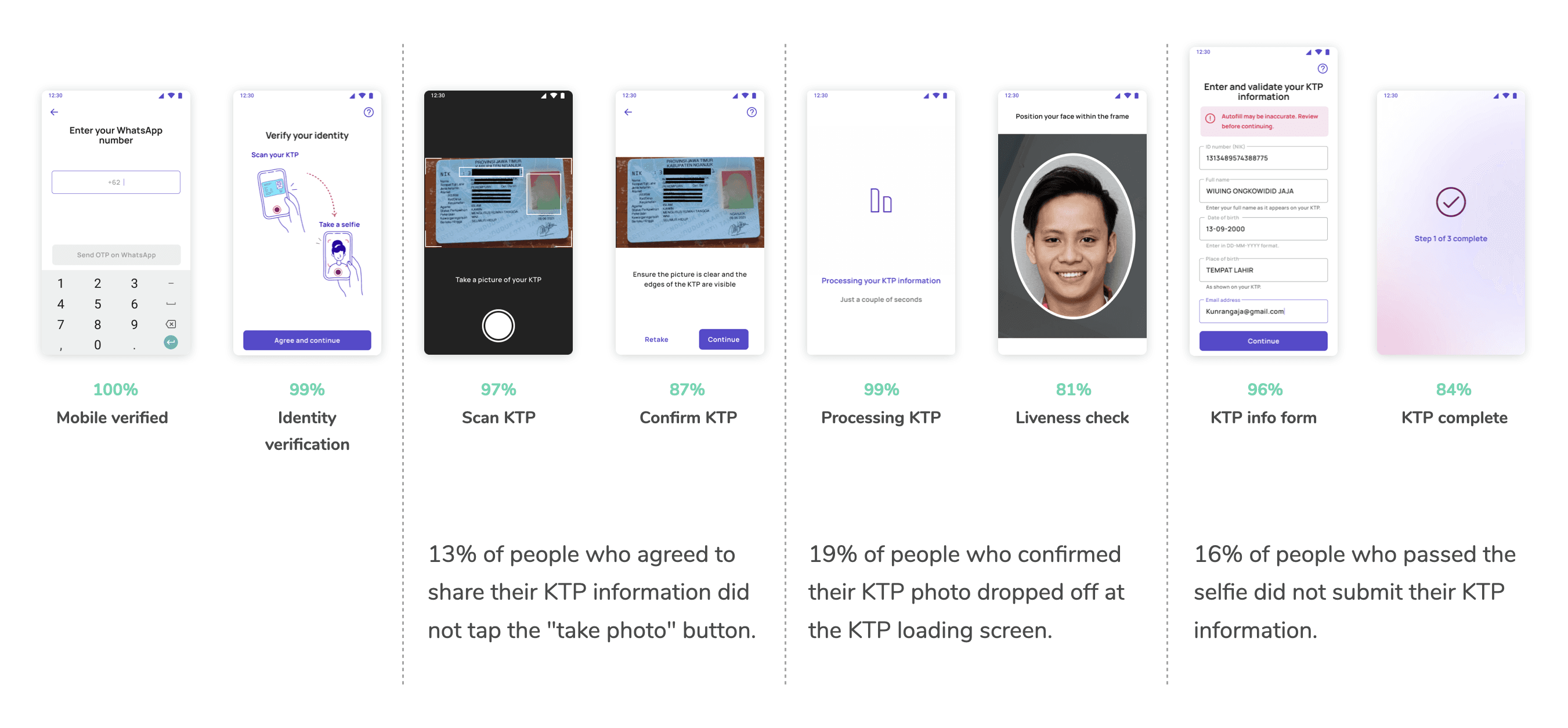
KYC detailed funnel during Q4 of 2023
We interviewed 15 applicants who dropped off: 5 at each of the three biggest drop-off points.
3 decided they didn't need the card after starting the application
1 got distracted by other tasks
1 was stuck when the app switched to English
2 wanted more product information
1 got a WhatsApp error saying to wait 1–2 weeks
1 thought the income slip had to be printed
1 reapplied with another number
3 hit technical failures (form, face check, signal)
2 continued but weren't approved
What this told us: drop-off had three causes we could act on. People weren't sure the card was for them, they got distracted mid-flow, and the flow failed or confused them at key steps. Each feature below targets one of these.
Other Insights
Objective Customer care report:
Users failed identity verification due to mismatches between their real-life appearance and the photo on their KTP.
Objective usability test:
5 users completed applications successfully
1 user had saved his KTP photo on another phone and scanned it using the phone he used to apply
1 user had lost his KTP and brought a B/W printout, which failed the verification
These insights made us certain about the next approach. We propose the OKR and prepare for the new design solutions.
Proposed OKR for Q3 2024
Objective: Increase the number of completed credit card application submissions
Key result:
Raise the KYC submission rate from 67% to 75%.
Raise the application submission rate from 48% to 58%.
Cut the time to complete an application from 6 to 4 minutes.
Reduce KYC-related customer care tickets by 30%.
Signals:
Higher application completion rate in analytics
Faster average time to complete key steps
Lower volume of application flow support tickets
Increased successful KYC upload rate
Higher usability scores from testing
Feature proposal:
App introduction onboarding
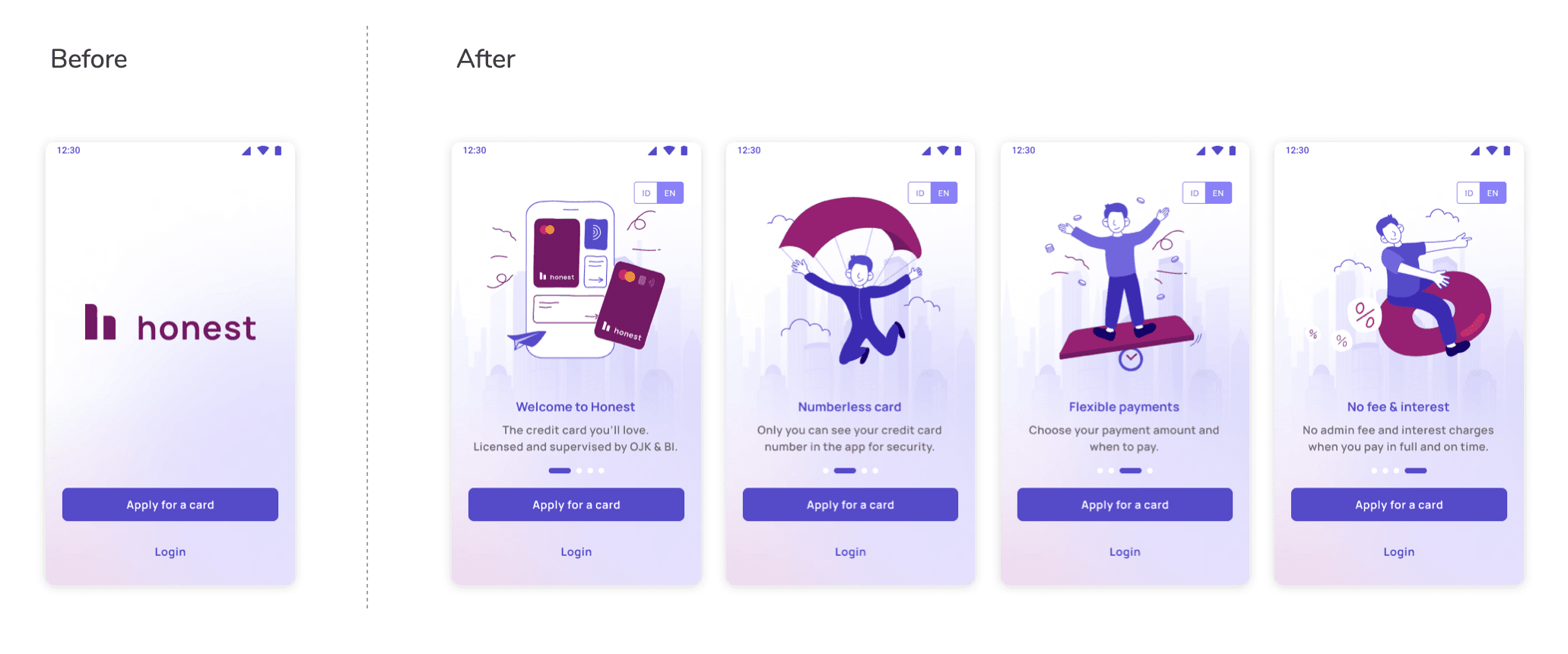
Result: We added app introduction onboarding and a language switcher, then launched an A/B test experiment. The test wasn't statistically significant. We shipped it anyway because it addressed what 5 of 15 interviewees told us: they weren't sure the card was right for them. The intro confirms they've downloaded the right app and lets them learn about the card without adding a step: they can tap Apply straight away or swipe to learn more. We monitored the click rate on the Apply button to make sure the intro didn't distract people from applying, and it held steady after launch.
Feature proposal:
WhatsApp reminder campaign
Problem statement: From user interviews, 5 out of 15 participants dropped off during the KYC flow because they were distracted by other tasks. Of these, 4 later returned to continue the process, while another forgot entirely. Behavioral data also showed that many users who stop the flow uninstall the app after 24 hours. This indicates that distraction and forgetfulness are major contributors to drop-off.
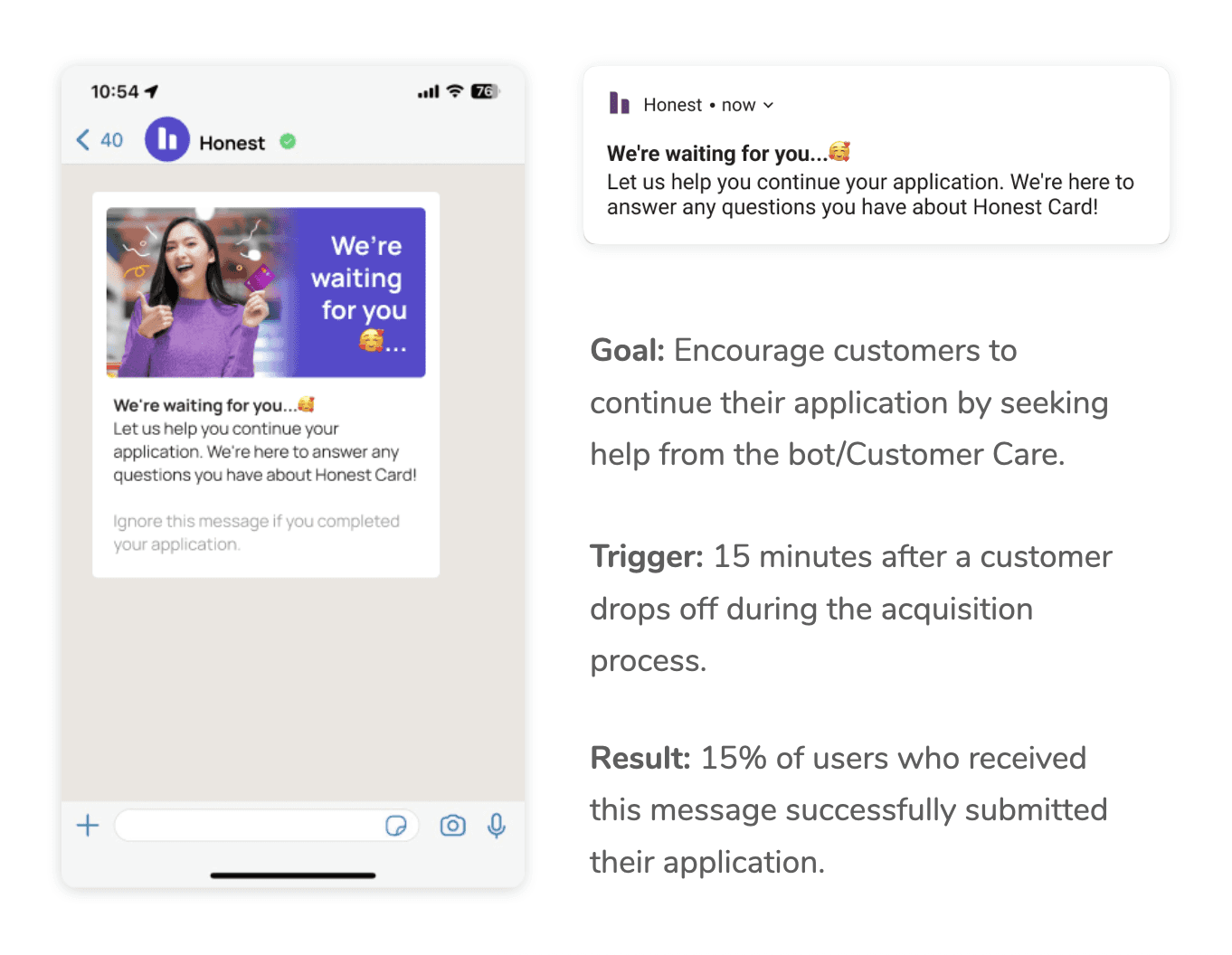
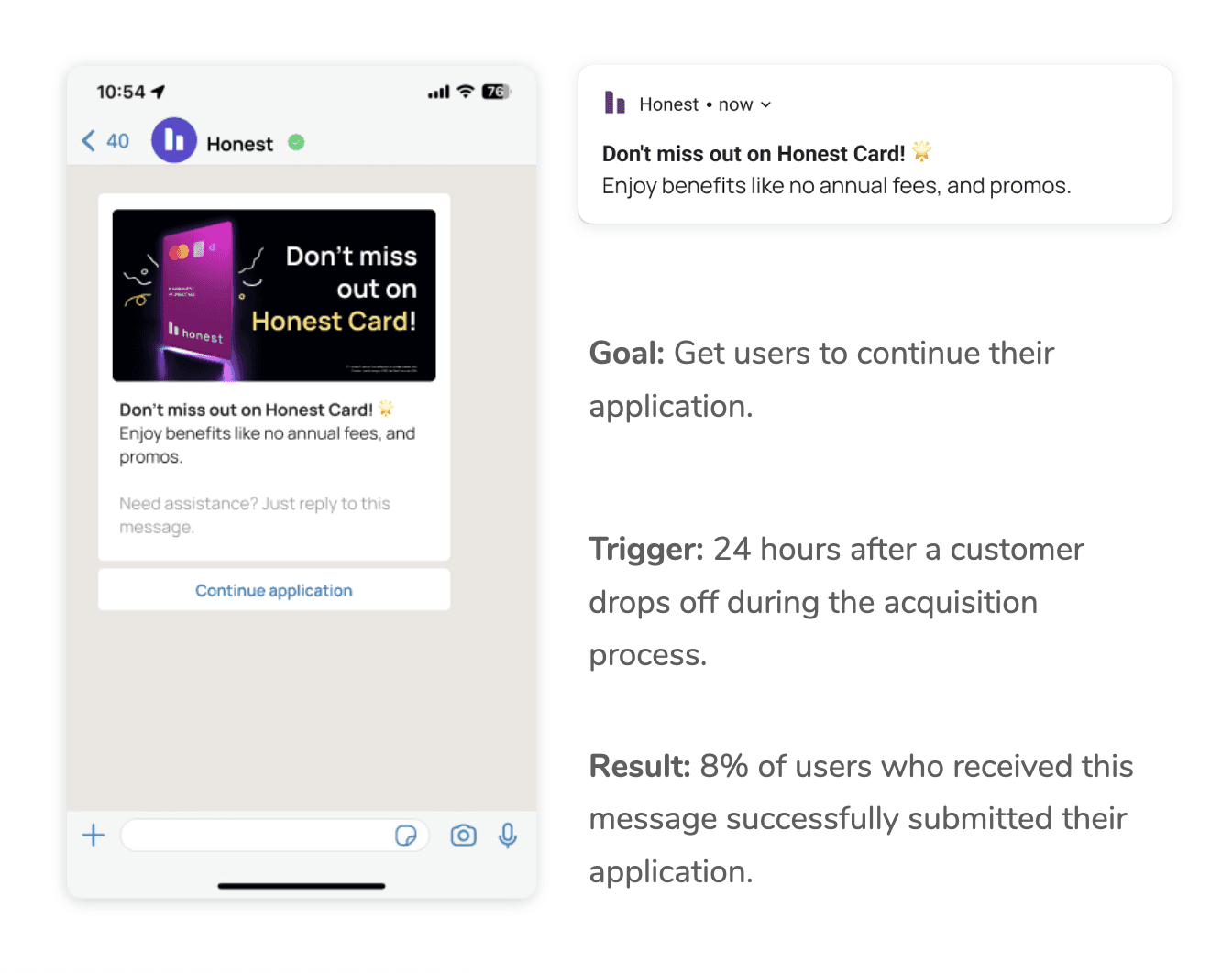
Feature description: Send WhatsApp reminders to users who drop off, first after 15 minutes and again after 24 hours. These reminders should prompt users to continue their application and provide a way to contact customer support if they are still uncertain.
Success criteria: 10% of users who receive a reminder come back to continue their application, adding to the KYC and application targets above.
Other solutions
During user interviews, some users gained a clearer understanding of the product and decided to submit an application. As a result, we assigned several customer care agents to contact users who dropped off during the application process to provide support in case they had doubts about the product. However, only 38% of the contacted users answered the call, and just 4% of them proceeded to complete and submit the application successfully.
We also sent follow-up emails to users who dropped off the application process, but only 0.02% opened the emails. Consequently, we discontinued both of these solutions.
Conclusion
This project demonstrated how focused UX improvements, grounded in both quantitative and qualitative insights, can unlock meaningful business impact. By combining funnel analytics, drop-off data, customer care reports, usability testing, and user interviews, we identified the KYC stage as the primary source of friction, and fixed it through clearer guidance, improved interactions and coordinated backend changes, cutting drop-off at KYC from one in three applicants to just over one in four.
Beyond the metrics, this case reinforced my approach as a design lead: triangulating data to inform decisions, aligning teams around clear OKRs, and validating solutions through experimentation. By balancing user needs with business constraints and compliance requirements, we delivered improvements that scaled across teams and established a stronger foundation for future acquisition and onboarding optimisations.